

View the markets we serve.
View MarketsDefense Personal Property System
Markets
National SecurityCustomer
US Transportation CommandServices
Business Strategy, Enterprise Services, Engineering, Security, Operations
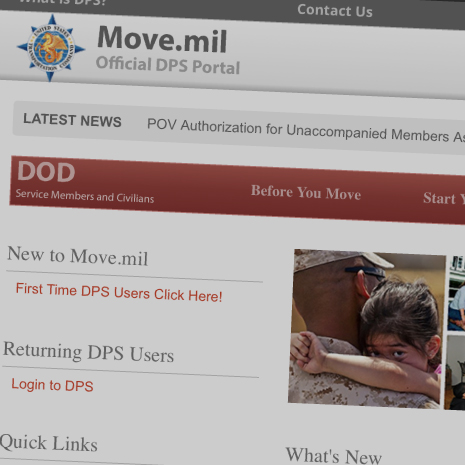
CPS has provided expert-level full life-cycle Java Platform Enterprise Edition software design, development, fielding and sustainment of the USTRANSCOM’s Defense Personal Property System (DPS). The support provided by CPS includes: requirements definition, change management, continuous process improvement, analysis, gap analysis, systems analysis, design, Enterprise Architecture, data modeling, application development, process engineering, interface design and development, documentation, testing, and operation and maintenance support. DPS is a worldwide web-based capability that enables the planning, booking and tracking of over 500,000 household goods shipments annually for all DoD Service Members and their families. DPS subsumed over 25 DoD legacy transportation and logistics systems, and includes hundreds of thousands of lines of custom Java code and thousands of database tables. DPS resides in a Defense Information Systems Agency (DISA) Enterprise Computing Center (DECC) in Ogden, UT and is established in a multi-tier enterprise-class environment including failover and redundancy at each level, as well as a COOP capability in a separate DECC facility, and development, development-test and test environments at contractor facilities in VA.
CPS engineers employed industry best practices, including, but not limited to using the Aspect- Oriented Programming (AOP) based architecture, Model-Driven Design, 3-tier applications and implementation of Java-based Enterprise Integration Patterns (EIP). CPS personnel utilized all aspects of Java/JEE platform including Spring framework, JSP/Servlets, JSTL, EJB, JSF, JUnit, Struts, Spring, Hibernate, JDO, JPA, Java Mail, JCA, JAXB, Log4J, SLF4J, SOAP-based web services (JAX-RPC/JAX-WS), RESTful services and XML technologies (e.g. XML schemas, XSL stylesheets, XPATH, castor). Additionally, CPS personnel applied considerable expertise in peripheral tools and technologies that enabled the successful implementation of Java-based development project and its subsequent deployment in production. CPS personnel have designed, developed, deployed and supported in production, enterprise Java applications designed for various deployment environments such as Oracle Weblogic, RedHat JBOSS, Sun Java application server, IBM Websphere, Apache Tomcat and Sun glassfish application servers on both the Windows and unix/linux platforms.
Captain James A. Lovell Federal Health Care Center (FHCC) PACS Integration
Markets
Health ITCustomer
US NavyServices
Business Strategy, Enterprise Services, Engineering, Security, Quality Assurance, Operations
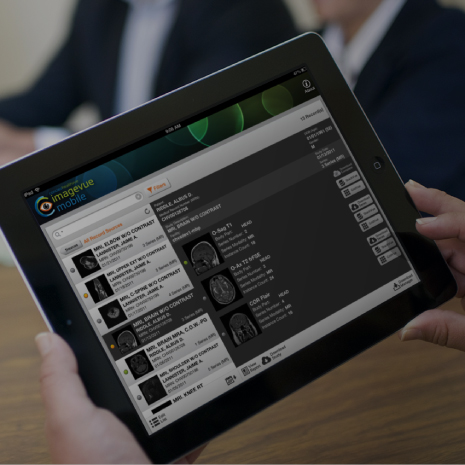
CPS has established core capabilities relative to data intensive cross enterprise integration solutions while embracing industry standard methodologies, state-of-the-art architectural frameworks, and emerging medical and health information exchange standards. The Interagency Image Sharing / PACS Integration program involved the application of engineering and analysis techniques which resulted in the design, development, prototyping and delivery of a cross enterprise solution that enabled the first ever medical image sharing between the DoD and VA. This has resulted in measurable improvement in operational efficiency at DoD and VA medical treatment facilities by enabling physicians’ immediate access to patient radiology records. Leveraging the Agile development methodology, CPS developed the NDAA solution in accordance with Service Oriented Architecture (SOA) principles, featuring a rich set of Web Services that enables the cross-enterprise integration of disparate Picture Archive and Communications System (PACS) radiology data. Through our efforts on this program, CPS has supported the VA Strategic Plan and strategic health systems modernization efforts by providing full lifecycle IT solutions that span system design, hardware and software integration, operations, maintenance, installation, and training at both DoD Military Health System (MHS) and VA Medical Treatment Facilities worldwide. Specific to the Federal Health Care Center (FHCC) unique environment of segmented DoD and VA networks, the PACS Integration enabled DoD and VA credentialed radiologist to view diagnostic radiology on any patient whether the image was acquired on a DoD sourced modality or a VA modality. The integration leveraged existing systems including PACS, BHIE (DAS), and VA VIX (CVIX) to support DICOM Query/Retrieve, Patient Correlation, and image transmission across secured networks.
Network Enterprise Technology Command (NETCOM) Global Network Enterprise Planning and Engineering (GNEPE) / Cyber Network Operations and Security Support (CNOSS)
Markets
National SecurityCustomer
US Army NETCOMServices
Engineering, Security, Operations
CPS has supported the U.S. Army Network Enterprise Technology Command/9th Signal Command (Army) (NETCOM/9th SC (A)) Assistant Chief of Staff (ACofS), G3/5/6/7 for over 8 years providing system, data and network engineering service functions covering multiple applications, systems and user groups. NETCOM is the single authority assigned to operate, manage, and defend the Army’s ‘Infrastructure’ at the enterprise level and authority for any standard, system, architecture, design, or device that impacts the Army Enterprise Infrastructure. CPS supported the design, deployment and sustainment of various infrastructure systems supporting US Army initiatives to include Active Directory and Exchange integration and migration, SAN engineering, and the application of backup and clustering technologies. Technology services include on-site ITIL-based Service Management, Storage Operations, Database Management Services, Security Engineering, Systems Administration, Information Assurance, and infrastructure support and facilities management services. We leverage the BMC Enterprise Services Management System (ESMS) suite to implement solid and repeatable ITIL principles across all task areas of the project. CPS senior engineering staff provides Operational Engineering (OE) for Army Enterprise and Global Network Enterprise (GNE) Nonsecure Internet Protocol Router Network (NIPRNET), SECRET Internet Protocol Router Network (SIPRNET), and Deployed Forces (DF). Further, we are responsible integration and sustainment capability management support of the Enterprise Data Center (EDC) architecture, network management toolsets, applications, related hardware and software per design and build guidance. The EDC is managed by the Theater Network Operations and Security Centers (TNOSC) and provides enterprise Information Technology (IT) services to approved Army customers. CPS staff helps integrate new EDCs and sustains existing EDCs within the Army Enterprise under highly compressed schedules in support of the Warfighter. CPS engineering staff also provides implementation and engineering support across Active, Reserve, National Guard, TNOSC, Army installations, the Army CIO/G-6, project management communities, and NETCOM/9th SC (A) ACofS, G-5, as tasked by the Government Technical Lead. The Team supported the installation, connection and configuration of Army GFE to facilitate NetOps capabilities being deployed in accordance with standard configuration and build requirements. Our teams continued efforts have helped increase effectiveness of IT services provided to the Warfighter, create an Army Intranet for unclassified traffic, reduce the total number of network gateways into the NIPRNET, and improve the Army Computer Network Defense (CND).
Architecture, Strategy, and Design System Engineering and Integration
Markets
Civil GovernmentCustomer
Department of Veterans Affairs, OI&TServices
Business Strategy, Enterprise Services, Engineering
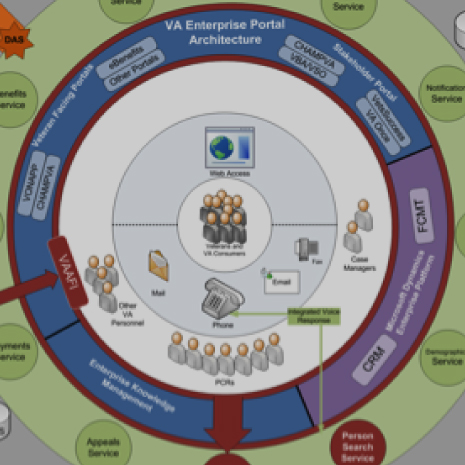
CPS is a major subcontractor providing senior level engineering resources to develop and apply common robust system engineering and integration processes critical to successful architecture support for approximately 30 projects assigned to the ASD PPM Product Engineering team. THE ASD SEI effort is responsible for maintaining all the Health, Benefits, Memorial, and Corporate portfolio, segment, service, solution, platform, data, and technical architecture aspects for each project.
Specifically our team provides Technical Analysis, Integration, and Design Support to plan technical integration services that facilitate the seamless integration of established work streams for the Health, Benefits, Memorial, and Corporate domain areas, to include review, analysis, high level design recommendations, gap analysis, impact analysis, risk analysis, and cost analysis. The architecture views address the concepts of operations for the Health, Benefits, Memorial, and Corporate and encompass the functions, relationships, and dependencies of external as well as internal systems. This includes end-to-end functionality and data flow as well as communications.
Mobile Health Software Quality Assurance and Compliance
Markets
Civil GovernmentCustomer
Department of Veterans Affairs, Office of Connected CareServices
Business Strategy, Engineering, Quality Assurance
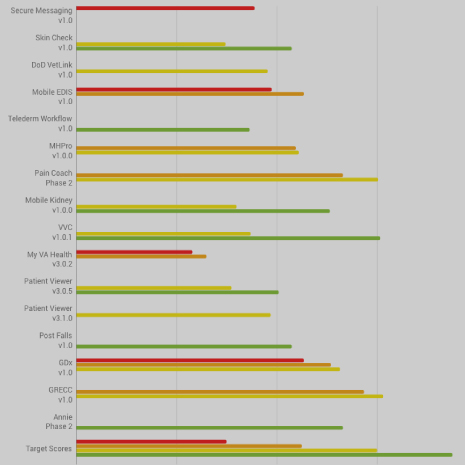
On the VA SQA Testing and Certification program CPS senior resources execute the full project lifecycle of testing activities to support the continued development, enhancement and deployment of Mobile Applications within the Agile development methodology. These activities include 508 Compliance, integration testing, functional testing, security/IA testing and full regression testing. CPS, managing its own resources on the program, develops and maintain all testing data, test plans, procedures and test scripts as required by ProPath for Mobile Apps. Our team also supports Mobile Health Usability and Human Factors Engineering. Similar to Human-Centered Design practices, members of our team review applications for usability and human factors from a “users” point of view. Our team has implemented “Mobile Health-wide” Software Quality Control (SQC). Our primary goal of our SQC team is to help define and set into motion procedures to monitor, evaluate and improve the product resulting Life Cycle Software Development. These Software Quality procedures shall be driven by quality control objectives which are mentioned below and are designed to help assist project leadership in meeting on time delivery with quality products. It should also be noted that these goals and objectives may vary between projects depending on the unique business needs of each of those projects. CPS has successfully supported SQA and SQC across 40+ mobile applications and has seen a continually improvement of the software quality through these efforts.
FFIEC IT Examination Handbook InfoBase
Markets
Civil GovernmentCustomer
FDIC FFIECServices
Business Strategy, Enterprise Services, Engineering, Quality Assurance, Operations
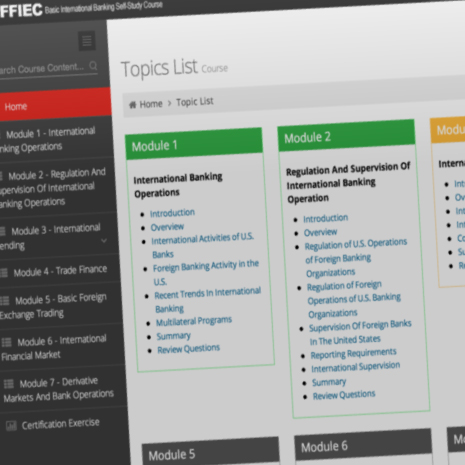
CPS provides full lifecycle design, development and implementation support services to transition the legacy Web Based FFIEC IT Examination Handbook InfoBase to a reengineered state utilizing an open source .NET Umbraco Content Management Solution (CMS). We manage all content and training material for the InfoBase in close collaboration with the FFIEC and from many supporting agencies to include; the Federal Reserve System (FRB), the Federal Deposit Insurance Corporation (FDIC), the National Credit Union Administration (NCUA), the Office of the Comptroller of the Currency (OCC), and the Consumer Financial Protection Bureau (CFPB). Our team is responsible for the complete product lifecycle of the effort including the implementation of the Content Management System (CMS), development of all required custom components, authoring of content and graphics, build out of the cloud hosting environment, analysis and migration, and the ongoing operations and maintenance of the solution. We delivered a solution that utilized a CMS to store FFIEC content, content metadata and other associated artifacts that makeup the content of InfoBase. The web based content is fully HTML5 compliant and fully functional in all modern web browsers.
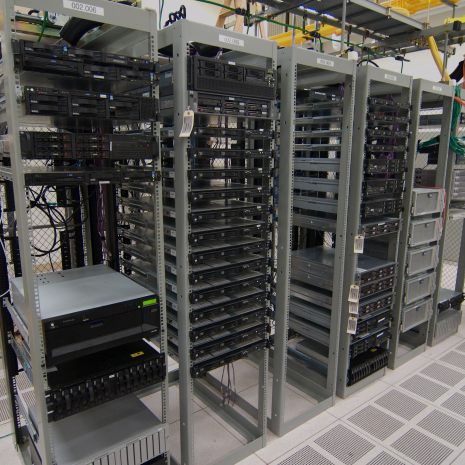
CPS also provides IT services, consulting and guidance on the FFIEC InfoBase hosting project related to O&M. CPS not only provides power, rack space and bandwidth for the FFIEC IT Examination Handbook InfoBase website, but also the physical hardware required for the virtualized environment (servers, SAN, networking). CPS provides all administration tasking including monitoring, maintenance, and updates. Our monitoring consists of hardware level (Dell Remote Access Card [DRAC]), virtualized level (vCenter), system level (New Relic Server), and the application level (New Relic APM). Additionally, we manage SLAs for bandwidth and availability and have proudly exceeded 99.99% availability on both bandwidth and availability for over 5 years.